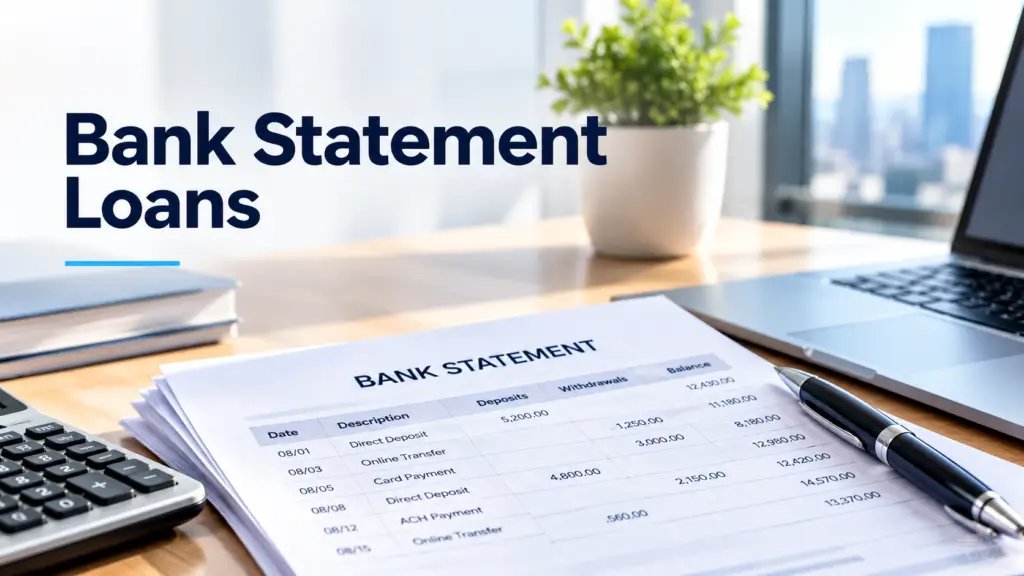
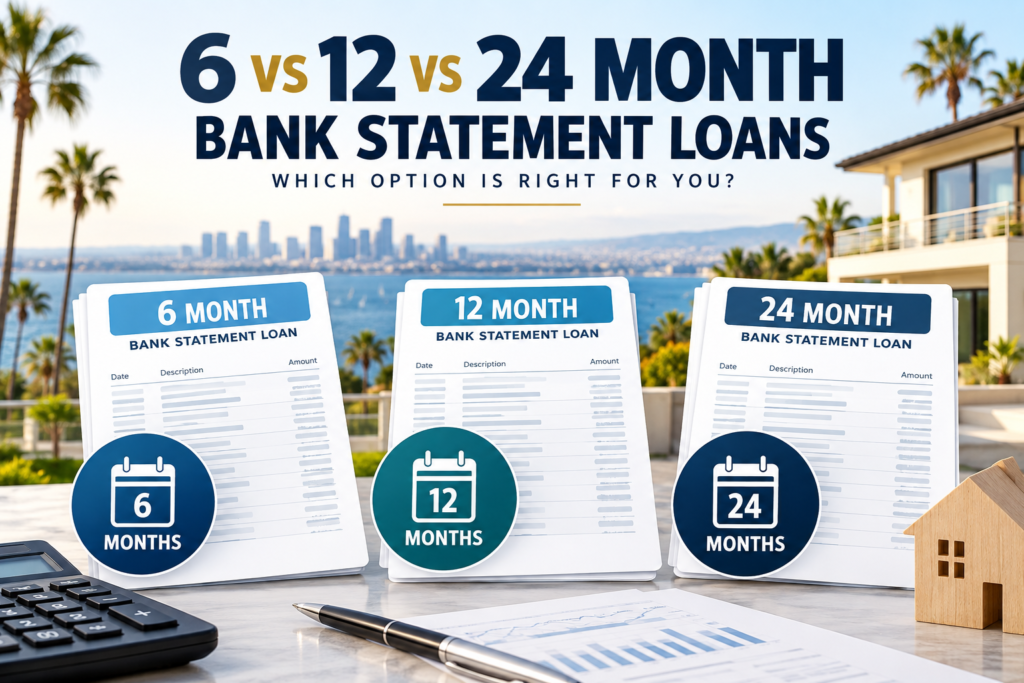
Understanding 6 vs. 12 vs. 24 month bank statement loans can help self-employed borrowers compare how different documentation periods may be used to evaluate income.
For self-employed borrowers, tax returns do not always provide the clearest picture of current cash flow.
A bank statement loan may offer another way to document income by reviewing eligible deposits shown on personal or business bank statements.
Bank statement loans are one type of Non-QM loan that may provide alternative income documentation options for eligible borrowers.
Depending on the applicable Pacific Bay program, 6-, 12-, and 24-month bank statement options may be available. The number of months used can affect how a borrower’s income history is evaluated, but a shorter or longer documentation period is not automatically better.
Understanding the differences can help borrowers and mortgage professionals identify which option may fit a particular scenario.
How Do Bank Statement Loans Work?
Bank statement loans are designed to evaluate income differently from traditional documentation methods.
Rather than relying solely on tax-return income, the lender may review eligible deposits shown over a specified bank statement period. How those deposits are evaluated can depend on factors such as the type of account, the nature of the deposits, and the requirements of the specific program.
There is no single income-calculation method that applies to every bank statement loan. Expense factors, eligible deposits, exclusions, and supporting documentation may differ by program.
For a broader introduction, see our guide to Bank Statement Loans for Self-Employed Borrowers.
What Is a 6-Month Bank Statement Option?
A 6-month option reviews a relatively short period of recent bank statement activity.
This may provide a more current view of the borrower’s cash flow when recent deposits are representative of ongoing business income.
Because fewer months are included in the review, changes in deposits during that period may have a greater impact on the overall income picture. Borrowers with significant fluctuations, unusual deposits, or seasonal businesses may require additional analysis under the applicable program.
A 6-month option should therefore not be viewed simply as an easier alternative to providing more statements.
What Is a 12-Month Bank Statement Option?
A 12-month option provides a full year of deposit history.
Reviewing 12 months can provide a broader picture of recurring cash flow and may help show how income changes throughout different parts of the year.
For borrowers whose business income remains relatively consistent, a one-year period may provide a useful balance between recent income and a longer operating history.
It may also provide more context for businesses that experience moderate month-to-month variations.
What Is a 24-Month Bank Statement Option?
A 24-month option uses two years of bank statement history.
The longer review period may provide additional perspective on income consistency and longer-term deposit patterns. This can be particularly relevant when a business experiences seasonal or variable cash flow.
However, providing more months does not necessarily mean that a borrower will qualify for more income.
The qualifying calculation still depends on the eligible deposits and requirements of the particular program.
6 vs. 12 vs. 24 Month Bank Statement Loans: Which Option May Fit?
There is no single answer that applies to every borrower.
One of the key differences among 6 vs. 12 vs. 24 month bank statement loans is the length of deposit history reviewed under the applicable program.
The appropriate documentation period may depend on factors such as:
- Stability of deposits
- Seasonal or fluctuating business income
- Personal versus business bank statements
- Recent changes in business cash flow
- The income-calculation method used by the applicable program
- Other eligibility and underwriting requirements
A borrower with a consistent recent income pattern may have a very different scenario from a business owner whose deposits fluctuate significantly throughout the year.
The objective is not simply to choose the shortest documentation period. It is to identify an eligible program and documentation method that appropriately reflects the borrower’s financial situation.
Explore the Right Bank Statement Option
Bank statement loans can provide self-employed borrowers with an alternative way to document income when traditional documentation does not fully represent their financial profile.
Pacific Bay Lending Group may offer eligible 6-, 12-, and 24-month bank statement options, depending on the program and borrower scenario.
Contact Pacific Bay Lending Group to discuss your scenario and determine which options may be available.